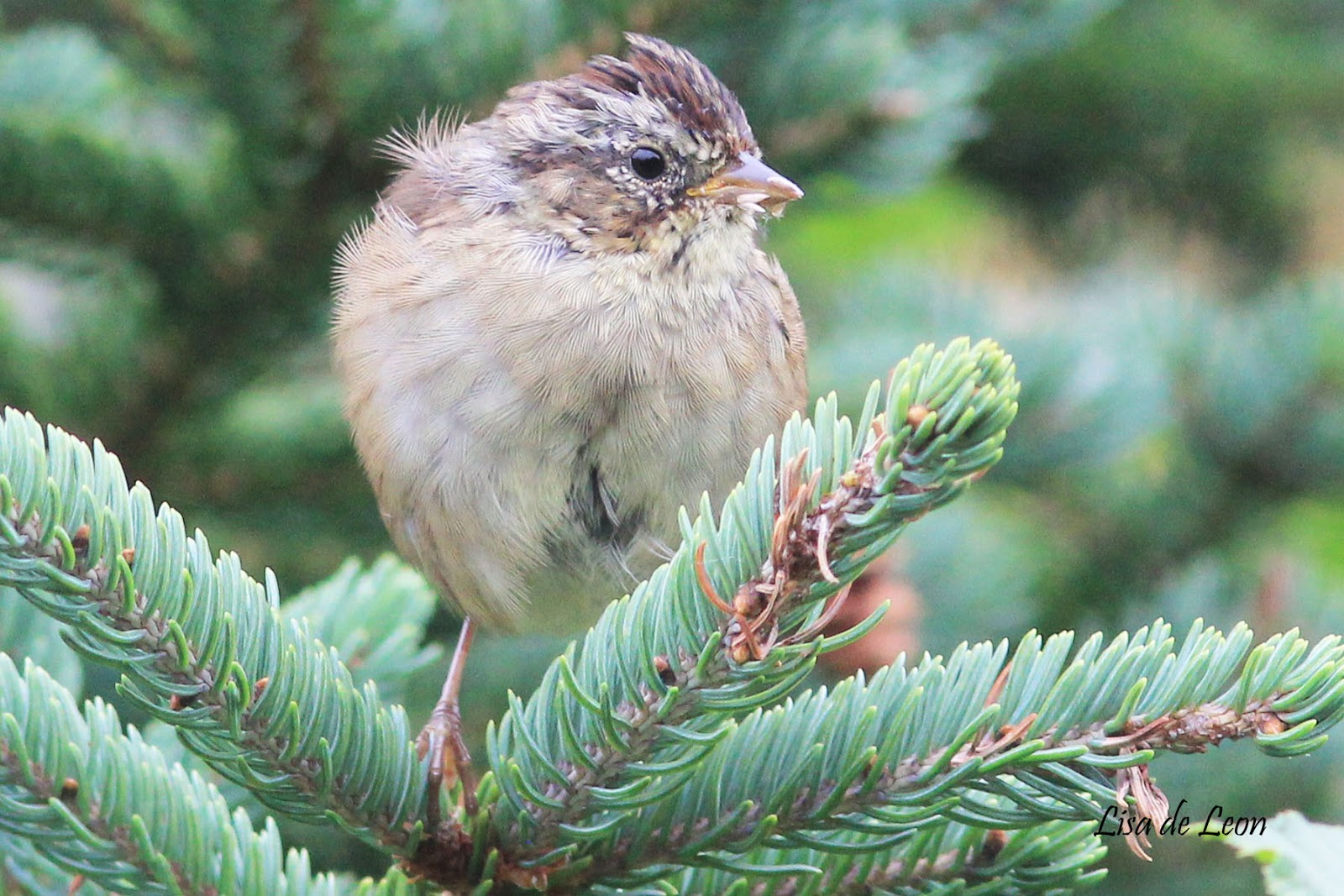
It is impossible to go to Cape Spear during breeding season and not see lots and lots of Savannah Sparrows. However, it is not that common to come upon a baby Savannah that has yet to take flight. It is this great little one that sparked this post.
Early in the season Savannah Sparrows dot the landscape, staking out their territory and attracting a mate.
They sing and sing, often oblivious to the many visitors passing them by.
In just a few short weeks the Savannah is seen gathering food for the likes of the little guy in the first picture.
Once again they go about their business as if no one were there, even when the wind nearly blows them off their perch.
During the period of raising a family, one adult will often serve as a distraction from the nest. They guard and protect their young in a very aggressive manner. There have been thousands of tourists at the Cape this year. It didn't seem to affect the breeding going on in the area. Yet, they did move to another location to avoid the foot traffic.
Cape Spear is not the only place to get a glimpse of this sparrow. Savannah Sparrows are frequently seen at Bidgood Park, though not in the same numbers as Cape Spear.
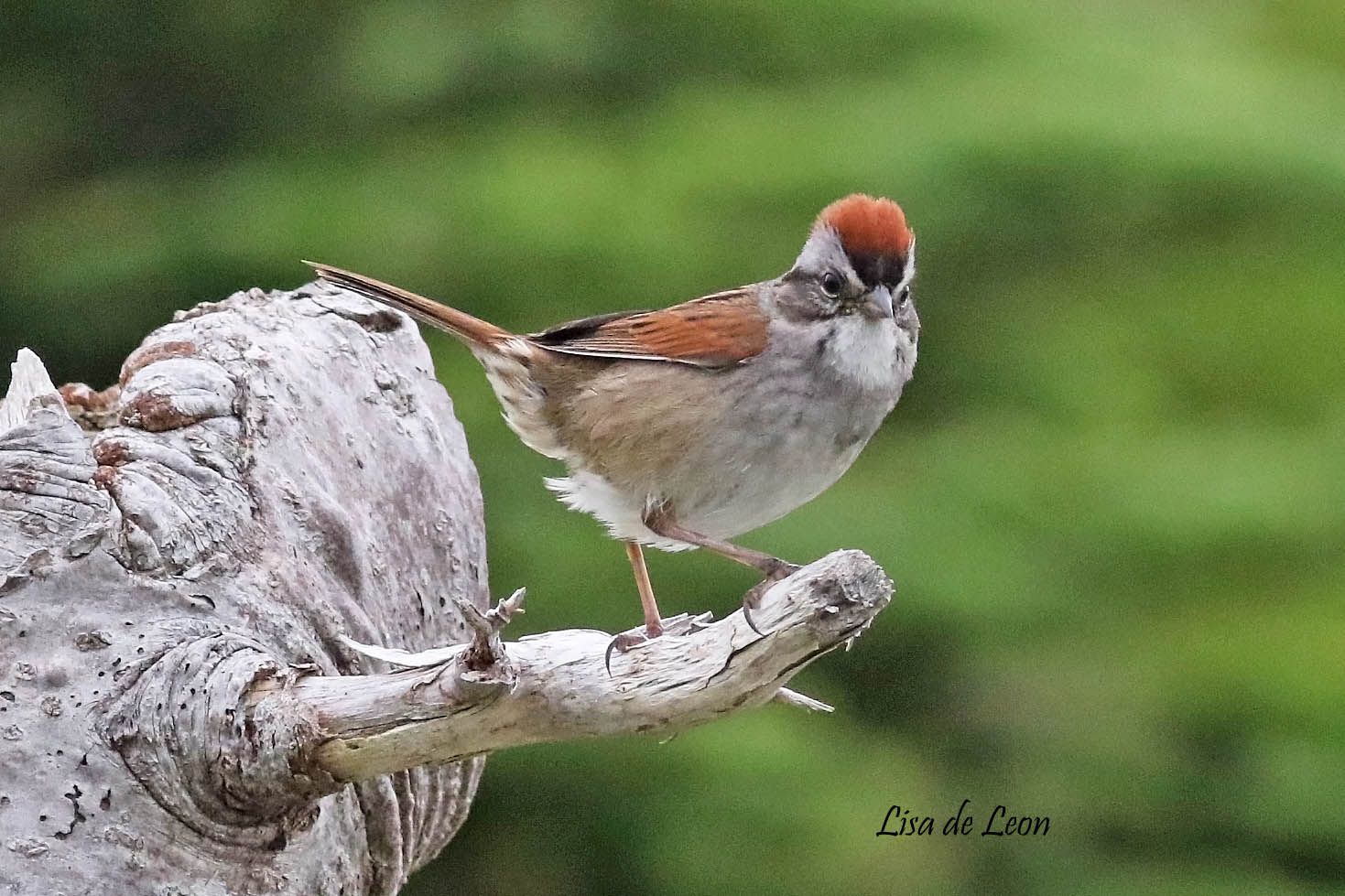
For many years, I only noticed Savannah Sparrows at the Cape. In recent years, however, I have been seeing the Swamp Sparrow that is more typically seen at Bidgood Park breeding at Cape Spear.
During breeding season it is remarkable to see just how red (photos not retouched) the Swamp Sparrows are.Throughout the season the red fades. Spring is the best time to observe the Swamp Sparrow.
Bidgood Park also serves as a breeding ground for the White-throated Sparrow as well as the whole length of Power's Road.
I think this is a juvenile because it does not bear the bright, distinctive markings of an adult White-throated. They, too, are quite vibrant in Spring. This is an example of the tan version of the species.
Why bother to look at all of the common sparrows? Well, because sometimes a rare or unusual bird may appear. This juvenile Junco (sparrow cousin) is an example. I have seen many dark young juncos, but this one was probably the darkest. It may take a little extra time to scan sparrows to verify a species, but the potential to unearth a rare one, especially at this time of the year, is always there.
Wednesday, October 18, 2017
Tuesday, October 17, 2017
All the Time!
This series of photos shows what I struggle with all the time. Not all birds are willing to pop out on a branch for a photo, so I find myself shooting between twigs, branches, leaves, and at birds "on the fly."
Why bother? Well many, many of these partial images of birds have snagged some rarities. I have frequently pestered birders with a wealth of knowledge and experience to help me identify therm.
The images here are just a sample of some of the challenging shots. Among them are notable birds: Vireo, Northern Parula and a Yellow-billed Cuckoo, and what else...
Here is a classic example. A distant shot of a small bird nestled into a darned-hard area to photograph. Below is the same image enlarged. It reveals an interesting bird. Many times my blurry, distant images go unidentified.
This one is a curiosity? When I look at these shots, I often wish I could turn back time and try to get a better picture.
Early-morning pictures are often the worst. Lighting conditions are usually terrible, but that is when the best birds seem to get moving. Have I failed to report a rare bird in a timely manner? Absolutely. I can't just throw an ID out there based on some of my images without getting some help.
What if all photographers used the camera first and binoculars second? Would we have even more reports of rare birds? Who knows? The reward just might be a Yellow-throated Vireo!

Sometimes I get a series of only pieces of the bird in the hopes they can all be reassembled into one identification. This is one such series of four shots of the same bird. To date, I still don't know what it was. The pictures just sit in my archives as a reminder to take every picture I can.
Why bother? Well many, many of these partial images of birds have snagged some rarities. I have frequently pestered birders with a wealth of knowledge and experience to help me identify therm.
The images here are just a sample of some of the challenging shots. Among them are notable birds: Vireo, Northern Parula and a Yellow-billed Cuckoo, and what else...
Here is a classic example. A distant shot of a small bird nestled into a darned-hard area to photograph. Below is the same image enlarged. It reveals an interesting bird. Many times my blurry, distant images go unidentified.
This one is a curiosity? When I look at these shots, I often wish I could turn back time and try to get a better picture.
Early-morning pictures are often the worst. Lighting conditions are usually terrible, but that is when the best birds seem to get moving. Have I failed to report a rare bird in a timely manner? Absolutely. I can't just throw an ID out there based on some of my images without getting some help.
What if all photographers used the camera first and binoculars second? Would we have even more reports of rare birds? Who knows? The reward just might be a Yellow-throated Vireo!

Sometimes I get a series of only pieces of the bird in the hopes they can all be reassembled into one identification. This is one such series of four shots of the same bird. To date, I still don't know what it was. The pictures just sit in my archives as a reminder to take every picture I can.
Monday, October 16, 2017
What a Rush
Just when wondering why there were no small birds around, this great Goshawk appeared on a branch. Big Bird!
Then, it lifts off and heads straight toward the cameras trained on it.
I couldn't help but remember the story told to owlers at Butterpot Park. During breeding season, a resident Northern Goshawk would attack anyone who came near its nest.
Thankfully, this one pulled up and went on its way.
Then, it lifts off and heads straight toward the cameras trained on it.
I couldn't help but remember the story told to owlers at Butterpot Park. During breeding season, a resident Northern Goshawk would attack anyone who came near its nest.
Thankfully, this one pulled up and went on its way.
Sunday, October 15, 2017
Gotta Love the One You're With
I did some early-morning walking yesterday around Long Pond, Pippy Park and Kent's Pond. Birds were just beginning to move. Nothing rare appeared, but "usuals" provided a lot of entertainment. The bravest and first to fly in was this hungry Hairy Woodpecker.
She paid no attention to me as she worked very hard to dig her breakfast out of the tree.
I don't think I had ever noticed the interesting little black and white pattern around the eye before. Even the common birds can bring new experiences.
I saw five Red-breasted Nuthatch around Long Pond. Typical of their behaviour, they come in close, sometimes too close for a good shot. Nevertheless, it is nice to see and hear them back in their familiar place.
I saw a flock of finch fly overhead, but I don't think they were goldfinch. Just above me, I found three American Goldfinch that didn't stay around long as the foot traffic began to pick up on the trail. There were few robins, chickadees, juncos and jays fliting through the woods.
Kent's Pond yielded 15 Ring-necked Ducks and one unknown "warbler," A birding trip is never complete without the one that got away.
She paid no attention to me as she worked very hard to dig her breakfast out of the tree.
I don't think I had ever noticed the interesting little black and white pattern around the eye before. Even the common birds can bring new experiences.
I saw five Red-breasted Nuthatch around Long Pond. Typical of their behaviour, they come in close, sometimes too close for a good shot. Nevertheless, it is nice to see and hear them back in their familiar place.

I saw a flock of finch fly overhead, but I don't think they were goldfinch. Just above me, I found three American Goldfinch that didn't stay around long as the foot traffic began to pick up on the trail. There were few robins, chickadees, juncos and jays fliting through the woods.
Kent's Pond yielded 15 Ring-necked Ducks and one unknown "warbler," A birding trip is never complete without the one that got away.
Subscribe to:
Posts (Atom)