Sunday, June 6, 2010

Muscovy Duck

I took a drive around CBS last Wednesday afternoon when the sun came out. It is so different to drive and walk around with no particular destination in mind. It is like being in the mall on a rainy day when a clerk asks if they can help you. My usual answer is "No, thank you. I'm just browsing." That is what I am doing when I go birdwatching - finding likely places and just browsing. Time can really get away from you though, particularly on a sunny, warm day.
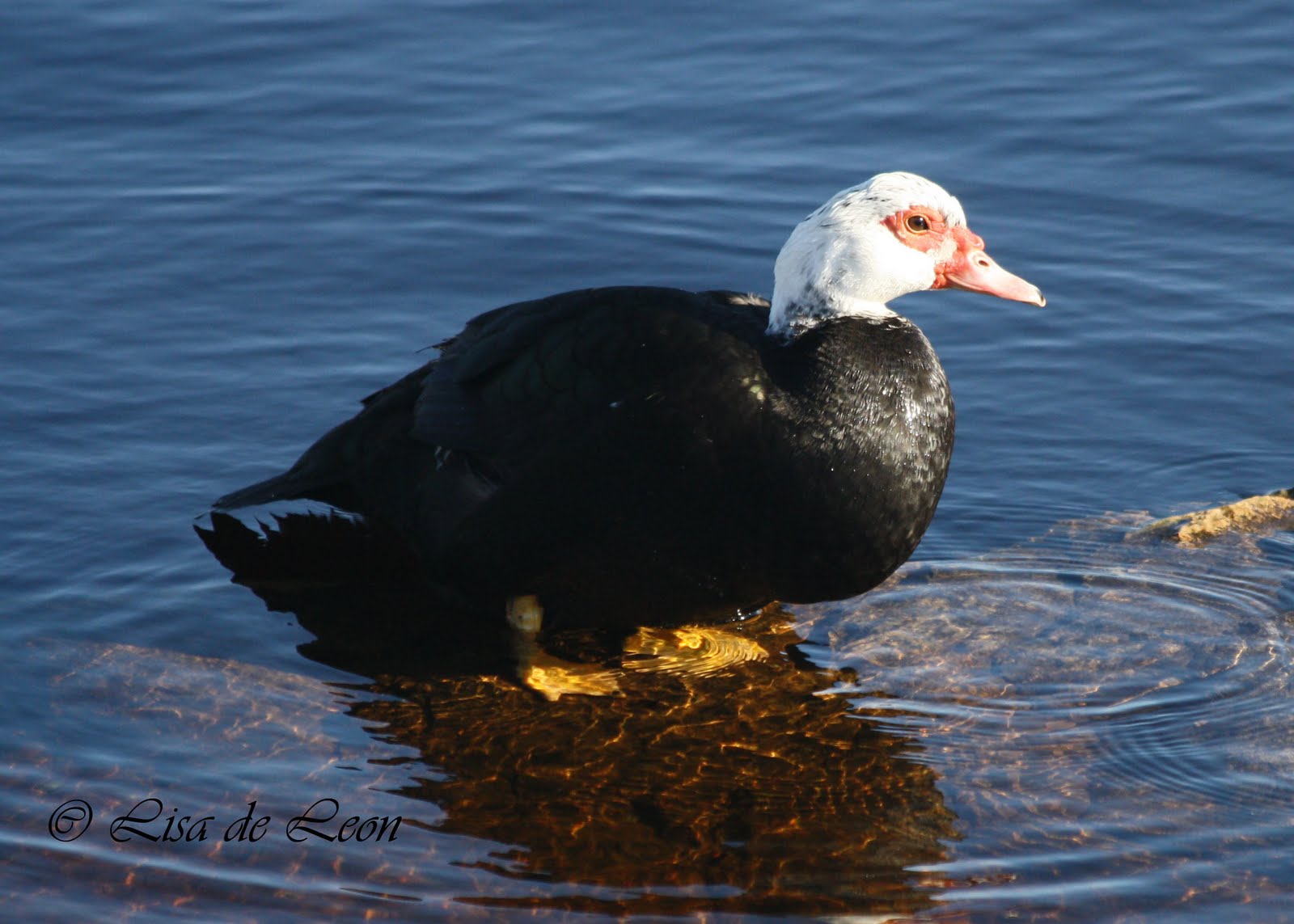
On Wednesday, I decided to explore some of the pond roads. I discovered that almost every community has a Pond Road. I believe that it was on Gully's Pond Road where I met up with this domestic Muscovy Duck.  At first I was quite excited when I noticed a different duck at quite a distance.  As I got closer, I recognized this as the Muscovy Duck.  Apparently, its owner has several and releases them in the "wild" during the Spring and Summer.


The Muscovy Duck does exist in wild flocks in Mexico, Central and South America. Nevertheless, it has been domesticated in these and other parts of the world for meat and eggs. While it may be a domesticated duck, it is still very nice to have a chance to see one here in this province.

Saturday, June 5, 2010

Common Tern


The Common Tern have returned. They can be found in ponds, lakes and around the shore. In the St. John's area I have seen the Common Tern at QV Lake (sitting on a buoy at the West end), in the harbour, at Forest Pond and Maddox Cove beach.

There are three types of terns that frequent Newfoundland and identifying them can be difficult, particularly when they are at a distance.

The distinguishing characteristics of a Common Tern, according to the field guides, are: the head and back neck are black; the outer primaries are black as seen in this picture of the spread wings; the legs are red; the bill is a reddish-orange with a black tip at the end; and the tail is forked. They are a little larger than the Artic Tern and have longer legs. It is interesting that they winter on the coast line of South America.

The call of the Common Tern is quite different from seagulls, and they are easy to isolate when among groups of gulls. They will often sit quite low on a rock or buoy that projects out of the water. Pairs seem to stay close together. Their flight patterns are swift and very different from gulls.

They use their speed to flit all around the fishing grounds. While fishing they hover above the target and wait for the right moment. It is common to see them set up several times before diving for a fish. Their true grace shows when in flight or hovering. When sitting on a rock, they look somewhat awkward and disproportionate. But not when in the air. It is really quite a show.


Once the Common Tern has a bead on its meal, it dives - sleek and straight into the water to snag a fish.

I have yet to see or at least identify the Arctic Tern or the Caspian Tern but I am keeping my eyes open for the different kind. The Arctic Tern has been spotted here by others this year.

Friday, June 4, 2010

Wilson's Warbler


The woods are filled with splashes of yellow these days. There is the American Goldfinch, the Yellow Warbler featured in my last post and now there is the Wilson's Warbler, all among many others.

The Wilson's Warbler is a very small bird ranging from 10 to 12 cm. They may be seen perched atop a tree like this one, flicking its tail.  They eat a variety of insects. It would be good to have a flock of these in the yard when the flies descend on us this summer.

The yellow of the Wilson's Warbler does not seem to be a bright as that of the Yellow, and they don't seem to be as prevalent. The yellow on this bird is mixed with an olive green color while the face and neckline are a brighter yellow. One very clear distinction is the shiny black crown.

This little bird winters in the Caribbean, along with many other Canadian "Snowbirds." Smart bird. When it returns to Newfoundland in the summer is may be found in areas where there is significant water. This includes boggy areas, ponds or lakes.


This Wilson's was photographed just off Cochrane Pond Road in Goulds.  It was really shy and would hardly show itself until suddenly, it changed its mind and perched atop a tree just before the group of birders left.

I first saw this warbler at Long Pond but it stayed deep in the tree next to the truck. There were too many branches to get any good pictures, not to mention the dark undercover of the tree, and of course, no sunshine. Keep your eyes and ears open and you just may come eye-to-eye with a Wilson's Warbler who is willing to sing and display itself.


Wednesday, June 2, 2010

Yellow Warbler

Yellow Warblers are back in town, everywhere. Where there were no birds, now there are many birds! Even without looking, it is easy to come upon a Yellow Warbler.

I have seen them at Long Pond, Kent Pond, Mundy Pond, Cochrane Pond Road, Forest Pond, and CBS. They are bright and colorful! It is quite likely with all of the leaves filling out in the trees that you may hear this little bird's song before you see it.

Often when a bird sings, it will puff up its feathers, particularly on the top of its head. From my experience, a singing bird also quivers a little. This means that as a photographer, I must be particularly steady so as not to blur the image too much.

A singing bird is a happy bird and may sit in the same place for quite some time, warbling away.

The Yellow Warbler feeds on insects and often nests in Willow trees.


The Yellow Warbler has a bright yellow breast and head. The male of the species has reddish-brown streaking on its breast. The eye is dark and is surrounded by a pale yellow eye ring. The beak is small and narrow. This is ideal for catching insects. The back, wing and tail feathers are darker and appear to be more of an olive color. The female has a duller yellow body and its back feathers are a darker olive color.
The first three images were taken at Kent Pond in bright day light. The next two images were taken at Mundy Pond in the "Golden Hour." This is a term in photography that refers to the early morning or late even hours, one hour after sunrise or one hour before sunset, approximately. These are really the best times of the day to shoot pictures.
The last image of this posting illustrates how easily a Yellow Warbler can blend into the background of newly budding trees. The other reason I posted this image is to illustrate how background can make or break a picture. This busy background takes away from the impact of this little bird. It is really not within our ability to dictate which tree the bird should sit, but a good picture requires the photographer to be patient and wait for the bird to move to a more favorable location. This busy image is fine for a record shot but not much else.

 This little Yellow Warbler is quite different from the flashy, singing warblers posted above. This little guy is a winter Yellow Warbler and to complicate matters for him, he missed migration.
 I photographed this little bird in the underbrush at Kelly's Brook. It is staying under cover and in thick brush. This behaviour is totally different from the many Spring and Summer Yellow Warblers observed all summer long.  One birder reported that this particular bard is being aggressive with a Wilson's Warbler and Kentucky Warbler who also missed migration. In fact, the Kentucky Warbler is a rare bird at any time in Newfoundland.
 Last year a Yellow-rumped Warbler wintered in this same location. I wonder what it is that draws in different birds in such obscure locations. It is a mystery, for sure.
I have been to Kelly's Brook on many occasions to try to photograph the Kentucky Warbler. While I have seen it, I have been unable to record the sighting with a picture. It hasn't been seen in this location for several days now. I was disappointed not to see the Kentucky but I was very happy to get a good look at this Winter Yellow Warbler.